THE LANGUAGE
OF SONGKET
Each Weave Embodies The Soul of Malay
Tradition and Craftsmanship
.png)
.png)
Each Weave Embodies The Soul of Malay
Tradition and Craftsmanship
Songket is a traditional Malaysian handwoven fabric made from silk or cotton, patterned with gold or silver threads. Derived from the Malay word “sungkit” meaning “to hook”, the name reflects its weaving method of hooking and slipping metallic threads into the fabric.

The elaborate motifs on songket fabric are heavily inspired by the natural surroundings.
Common patterns include geometric shapes and organic elements like flowers, birds, insects, and fruits, with designs often reflecting local philosophies and beliefs.

.png)
This motif is interpreted as a symbol of well-being and peace in living together. This symbol is also associated with hope and balance, and reflects good character, polite words, and peaceful life in a community.
.png)

.png)
The motif symbolizes love, purity, and refinement of character, as well as friendship and brotherhood. This motif is comes from flora such as flowers, often used to represent beauty, happiness, and fertility.
.png)


.png)
This motif refers to the hope of having an equal and corresponding position financially and spiritually, as well as symbolizing peace and success. This motif is usually found in Malay carving and weaving as a philosophy that teaches equality and harmony.
.png)
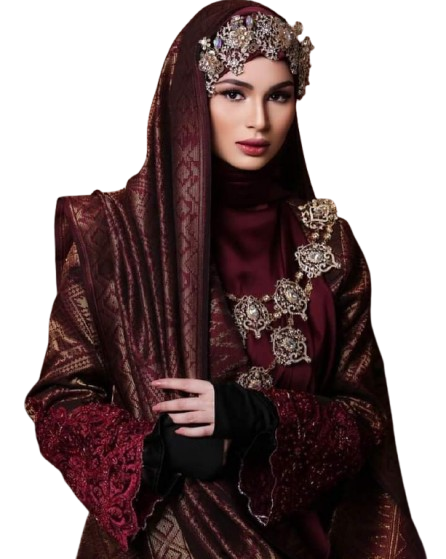
This intricate craft produces a luxurious textile once reserved for royalty, now proudly worn during weddings, festivals, and formal occasions.
A single piece of handwoven songket typically takes one week to six months to complete, with most traditional sarongs averaging two to three months; the exact duration depends on the complexity of the motifs, material quality, and the weaver's skill using the time-intensive supplementary weft technique.
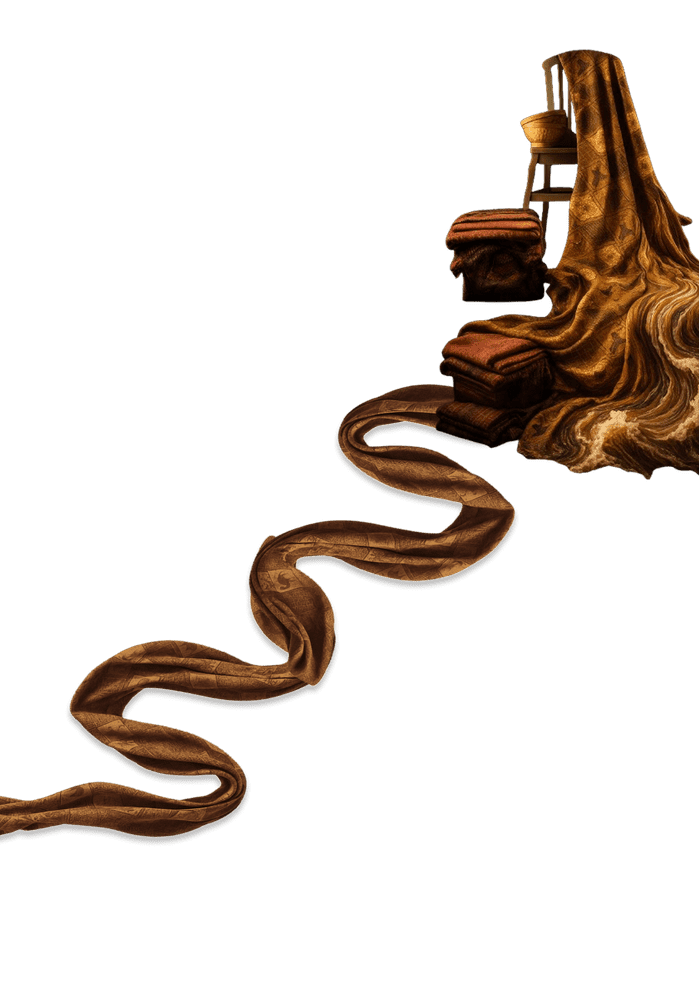
Songket prices vary widely: machine-woven versions cost about RM50–RM200 per meter, traditional handwoven pieces range from RM300–RM3,000, and premium heritage songket can exceed RM5,000. The cost mainly depends on the materials, weaving technique, and complexity of the motifs.
SONGKET ATTIRE
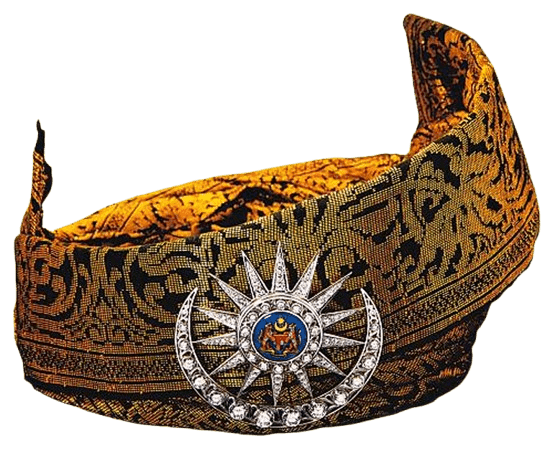
The songket fabric is used as the sampin, a short sarong worn over trousers and a Baju Melayu. Its colors should complement the main outfit, and the look is traditionally completed with a songkok or tanjak for a smart and respectful appearance at formal or cultural events.
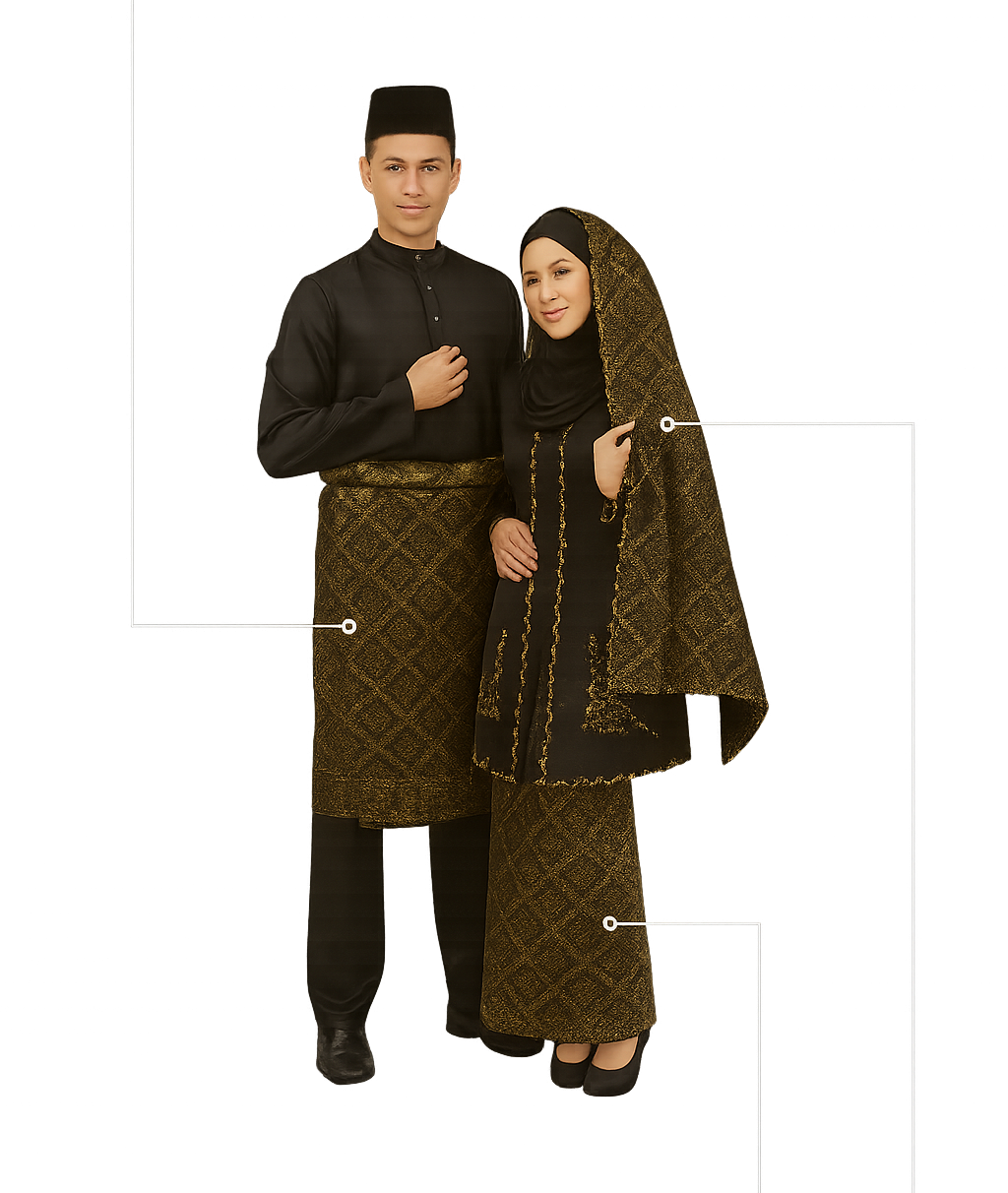
Songket is often tailored into a modest Baju Kurung or Baju Kebaya, featuring a loose blouse and long skirt, usually paired with a headscarf or shawl for Muslim women or during formal and religious occasions.